
Impact vs. Ability: How to Choose Your Next Digital Strategy Priority
Most businesses don't have a shortage of ideas. They have too many of them.
Start a podcast. Send a newsletter. Invest in SEO. Create more videos. Build a lead magnet. Hire a salesperson. Improve the website. Start running ads.
All of these ideas could be worthwhile. The challenge is determining which ones deserve your attention right now.
One simple way to think about this is what we call the Impact vs. Ability Matrix.
Take the opportunities in front of your business and evaluate them based on two questions.
Impact: How much could this improve the business?
Consider the potential result if you executed the idea well. Could it generate more qualified leads? Increase sales? Build trust with your market? Improve customer retention? Make your team more effective?
Ability: How capable are you of executing it well right now?
This is where you consider the reality of your business. Do you have the right people and skills? Do you have the time and budget? Do you have the processes and technology required to execute consistently?
Plot those two factors against each other and you get four categories:
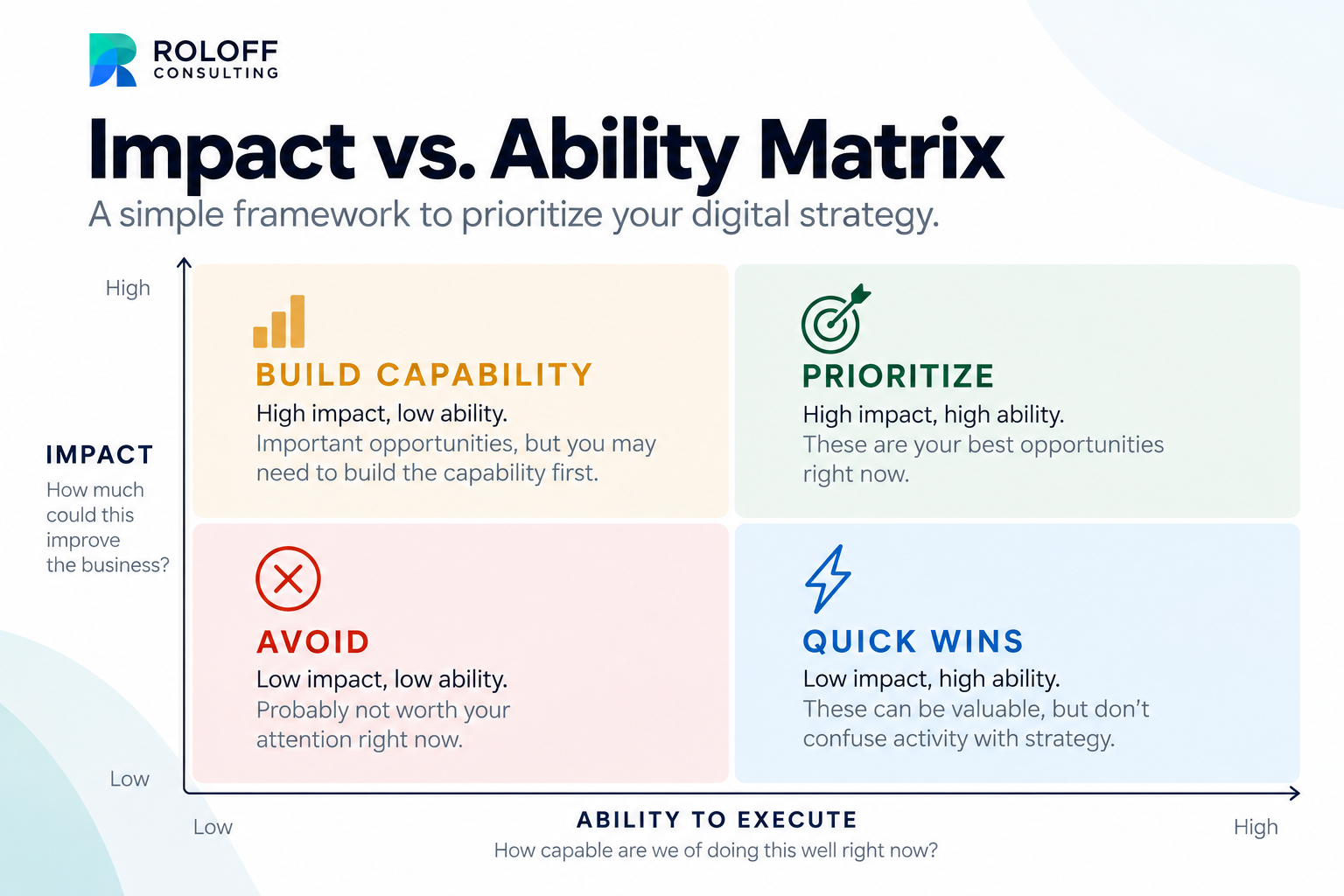
- Prioritize: High impact, high ability. These are your best opportunities and should receive the most attention.
- Build Capability: High impact, low ability. The opportunity may be worth pursuing, but you need to develop the capabilities required to execute it well.
- Quick Wins: Low impact, high ability. These may be easy and worthwhile, but they shouldn't distract you from more important priorities.
- Avoid: Low impact, low ability. If something is unlikely to make much of a difference and difficult to execute, it probably doesn't deserve your resources.
The same idea lands differently in different businesses
The important part is that the same idea can land in very different places for different businesses.
A podcast, for example, could be a significant opportunity for a company with knowledgeable subject matter experts, an established audience, and an internal team capable of producing it. For another company, it could require outside production support, new skills, and hours of executive time that simply aren't available.
The strategy didn't change. The organization's ability to execute it did.
The same exercise can be applied to SEO, newsletters, paid advertising, webinars, thought leadership, website improvements, sales initiatives, AI, or almost anything else your business is considering.
There is no universal digital strategy checklist
There is no universal list of digital strategies every company should follow. Good strategy requires understanding where you want to go, identifying the opportunities available to you, and making deliberate choices about where to focus your limited resources.
This is a big part of the work we do with clients at Roloff Consulting. We help leadership teams assess where they are today, identify the opportunities that can have the greatest impact, and build a clear roadmap for what to do next.
If you're trying to determine where your business should focus its digital efforts, start with two questions: How much could this matter, and how well are we equipped to do it?
The best opportunities are where those two answers overlap.